

The Power of Phase-Based Planning
You're staring at your goal.
Moving to Spain. Launching that business. Career change. Doesn't matter which one. They all look the same from where you're standing: impossibly far away.
So you do what everyone does. You make a list. A massive, sprawling, soul-crushing list of every single thing you need to do. One hundred tasks. Maybe more. And then you freeze.
Analysis paralysis isn't a character flaw. It's a tactical error.
You're trying to storm the entire battlefield at once. That's not how this works.
The Sector-by-Sector Approach
Here's what actual military operations understand that you don't: you clear one sector at a time.
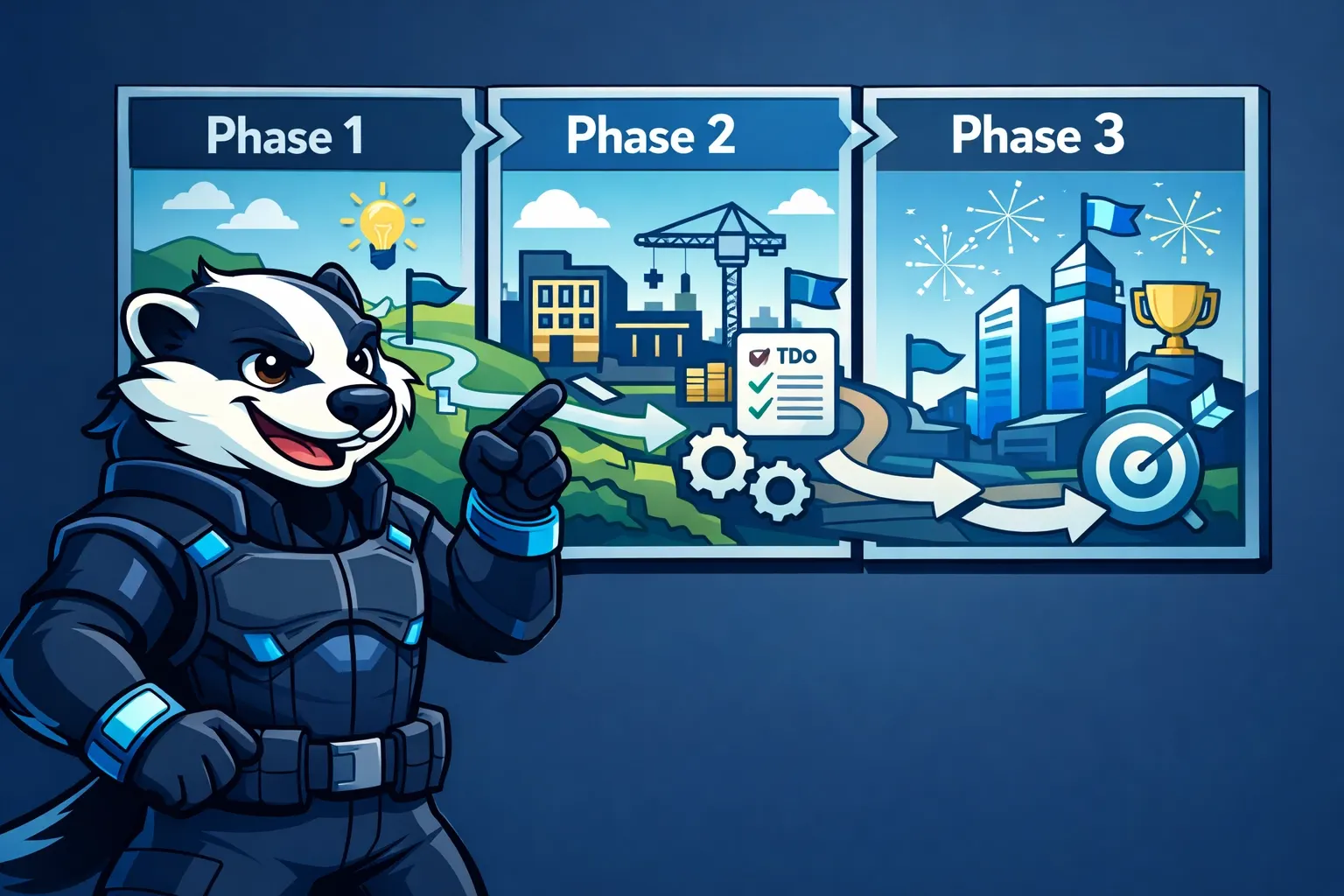
Phase-based planning is exactly that. You divide your massive, overwhelming goal into distinct operational phases. Each phase is a sector. Each sector has a specific objective and a cluster of related tasks.
Instead of drowning in a hundred disconnected to-dos, you focus on clearing the current sector. That's it.
Let's say your mission is "Migrate to Spain." Your sectors look like this:
Sector 1: Legal & Financial Preparation
Sector 2: Pre-Move Logistics
Sector 3: Arrival & Settling In
You don't think about Sector 2 while you're in Sector 1. You don't worry about booking movers when you're still gathering visa documents. One sector. One focus.
Why Your Brain Keeps Surrendering
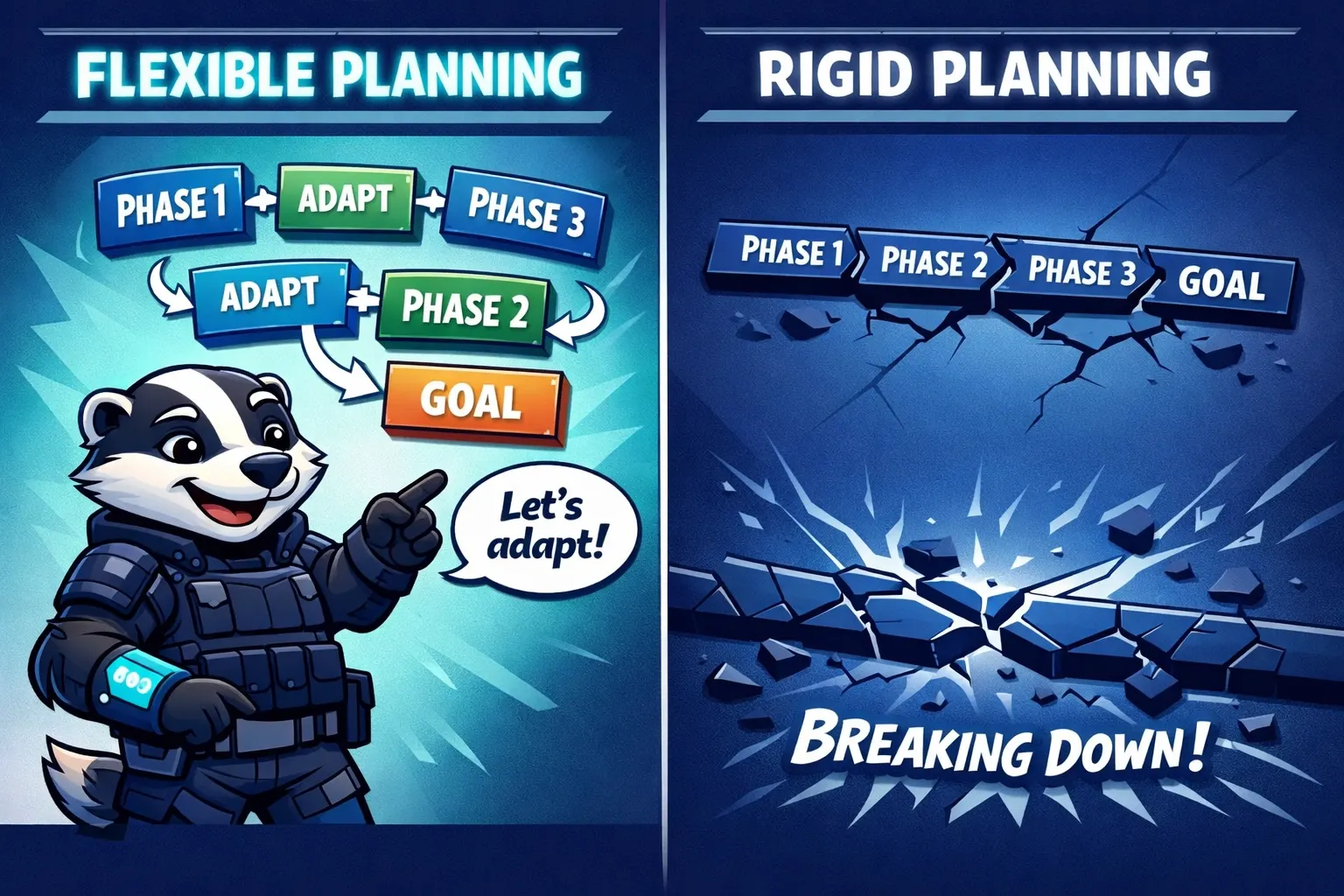
Your brain isn't built for chaos. It's built for sequential processing. When you throw a hundred unorganized tasks at it, your prefrontal cortex: the part that handles executive function: just taps out.
This isn't motivation. It's cognitive load management.
Here's the hard data: studies on working memory consistently show that humans can handle 5-7 distinct items at once. Maybe. On a good day. You're trying to juggle thirty times that.
Phase-based planning works because it reduces cognitive load to manageable levels. Your brain only tracks one phase worth of tasks at a time. Everything else stays in reserve until you need it.
The Three Tactical Advantages
1. You Actually Finish Things
Completing a single task feels okay. Completing an entire phase? That's a psychological win.
These aren't small victories. They're major milestones. Tangible proof that you're making progress. Each completed phase builds momentum. It proves to your brain that this goal isn't fantasy: it's happening.
And here's what most productivity advice misses: momentum is everything. The problem isn't motivation: it's memory. When you can look back and see a cleared sector, you remember that you're capable. That memory carries you into the next phase.
2. You Can Adapt Under Fire
Long-term goals never survive first contact with reality. Regulations change. Opportunities appear. Life happens.
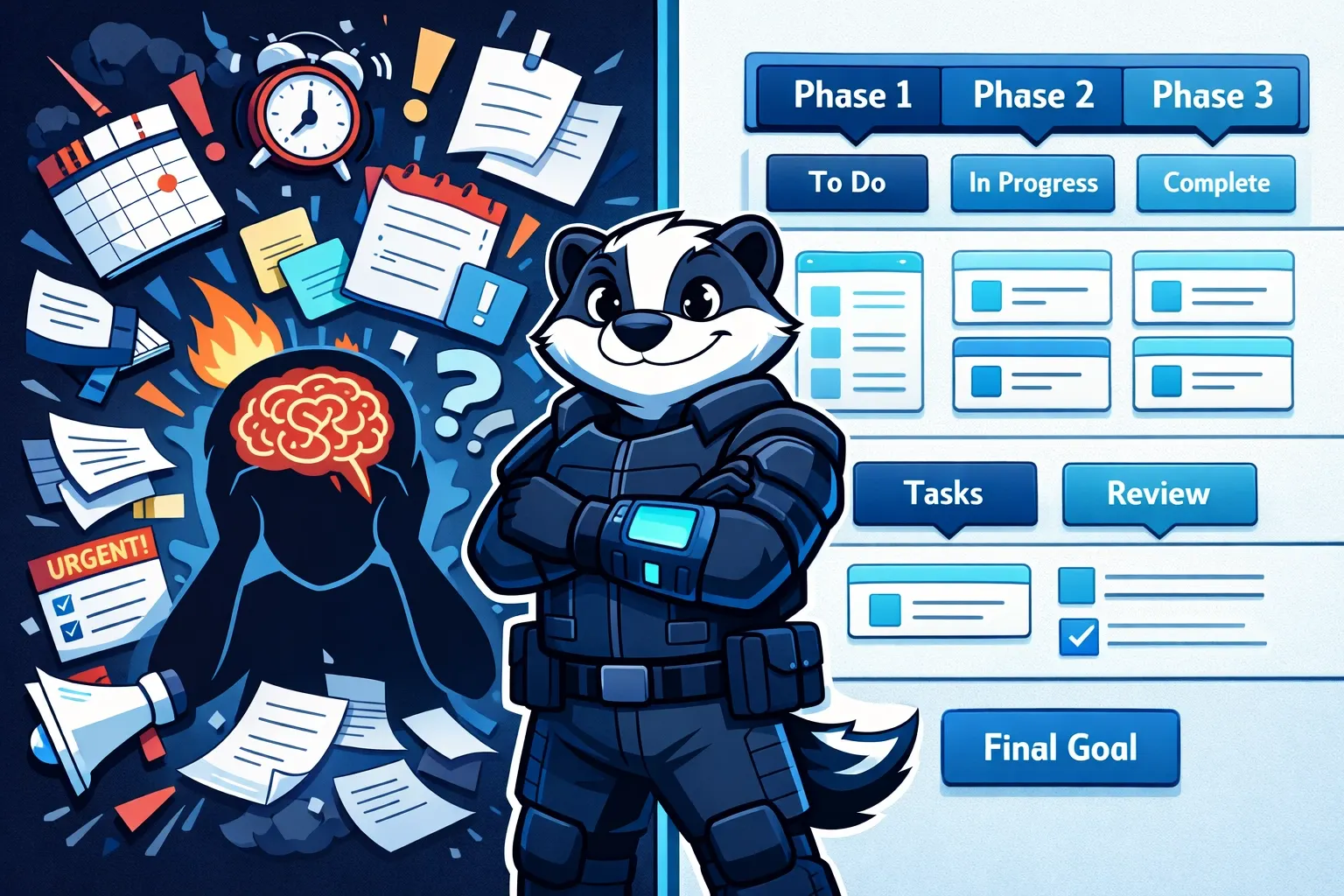
A phase-based approach gives you tactical flexibility. If something shifts in the middle of your plan, you adjust the tasks within the current or future phases. You don't scrap the entire operation.
You're working with a flexible framework, not a rigid script. That's the difference between a plan that survives and one that collapses at the first unexpected obstacle.
3. You Stop Wasting Energy
Every time you switch contexts: jumping from visa paperwork to apartment hunting to job applications: your brain pays a switching cost. It's not free. It drains mental energy.
When you work sector-by-sector, you minimize those switches. All your tasks in Phase 1 are related. They share context. Your brain stays in one operational mode instead of constantly shifting gears.
That conserved energy? You're going to need it. Big goals are marathons, not sprints. Energy management is how you make it to the finish line.
How Goalbadger Clears the Fog
When you create a goal map with Goalbadger, our AI automatically structures your plan into logical phases. It analyzes your goal, identifies the major sequential steps, and organizes them into clear sectors.
You don't have to figure out the phase structure. The AI does it.
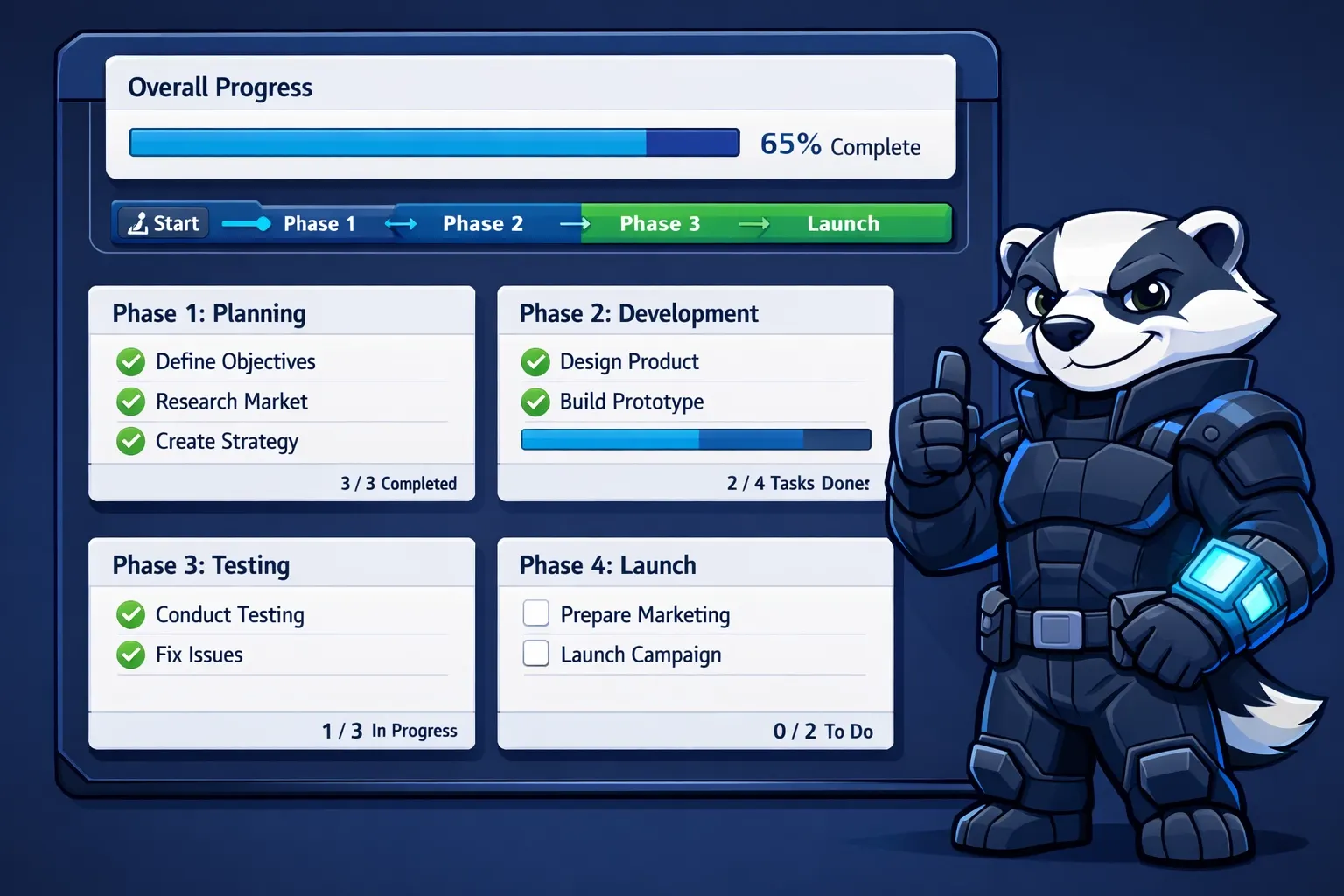
Inside the app, you can expand and collapse phases, drag-and-drop tasks between them, and get a visual overview of your entire mission. You always know which sector you're clearing right now.
That's the difference between useful AI and AI that just generates more noise. We built this because we kept watching people drown in their own task lists. Smart, capable people who just needed their goals organized into phases they could actually execute.
The Reconnaissance Phase
Here's something most people skip: before you even start Phase 1, you need reconnaissance.
You need to know what you're dealing with. What's the terrain? What resources do you need? What's the realistic timeline?
Goalbadger's AI handles reconnaissance for you. It maps the goal, identifies the phases, and structures the approach. You're not starting from zero. You're starting with an actual battle plan.
And if you want backup? Clans let you bring accountability partners into your sectors. Because trying to go lone wolf is killing your progress.
Stop Trying to Storm the Castle
You can't take the entire objective in one push. You're not supposed to.
Military operations clear sectors. Construction projects work in phases. Complex software ships in iterations. Why are you trying to do it all at once?
Phase-based planning isn't revolutionary. It's how humans have accomplished difficult things since we figured out how to plan beyond tomorrow.
The difference is most people don't apply it to personal goals. They treat their career change or life transition like it's supposed to happen all at once, in some magical burst of productivity.
It won't.
But sector by sector? That actually works.
Your goal isn't one massive, impossible task. It's a sequence of achievable phases. Clear one sector, move to the next. Repeat until you reach the objective.
You don't need to see the entire path. You just need to see the next phase clearly enough to start moving.
Your Orders
Stop staring at that hundred-item task list. Stop trying to hold the entire plan in your head at once.
Pick one phase. Just one. Define what "clearing this sector" looks like. Then start working through the tasks that get you there.
If you want the AI to map it out for you, that's what we built. But the principle works regardless of what tool you use.
One sector at a time. That's the tactic. That's how you turn chaos into progress.
Welcome to the Goalbadger approach. Now get moving.