

Drop and Give Me Twenty (Seconds): The Science of Task Initiation
You're staring at your laptop.
The document is open. The cursor is blinking. You know exactly what you need to do. And yet your brain is sitting there like a car with a dead battery. No spark. No ignition. Just... nothing.
Welcome to the frontlines of task initiation paralysis: the most frustrating battlefield in the war against your to-do list. And if you've got ADHD or executive function challenges? You're fighting it daily.
Here's the good news: this isn't a character flaw. It's neurobiology. And once you understand the mechanics, you can build a repeatable system.
This guide is that system.
You'll learn:
Why starting is the hard part (hello, executive function)
A simple method to break the “stuck” loop in minutes
How to turn it into a practical executive function planner you can run on autopilot
How a productivity app for ADHD should support you: phases, micro-tasks, reminders, and momentum
Let me introduce you to The 2-Minute Breach, the tactical maneuver that gets your brain off the couch and into the fight.
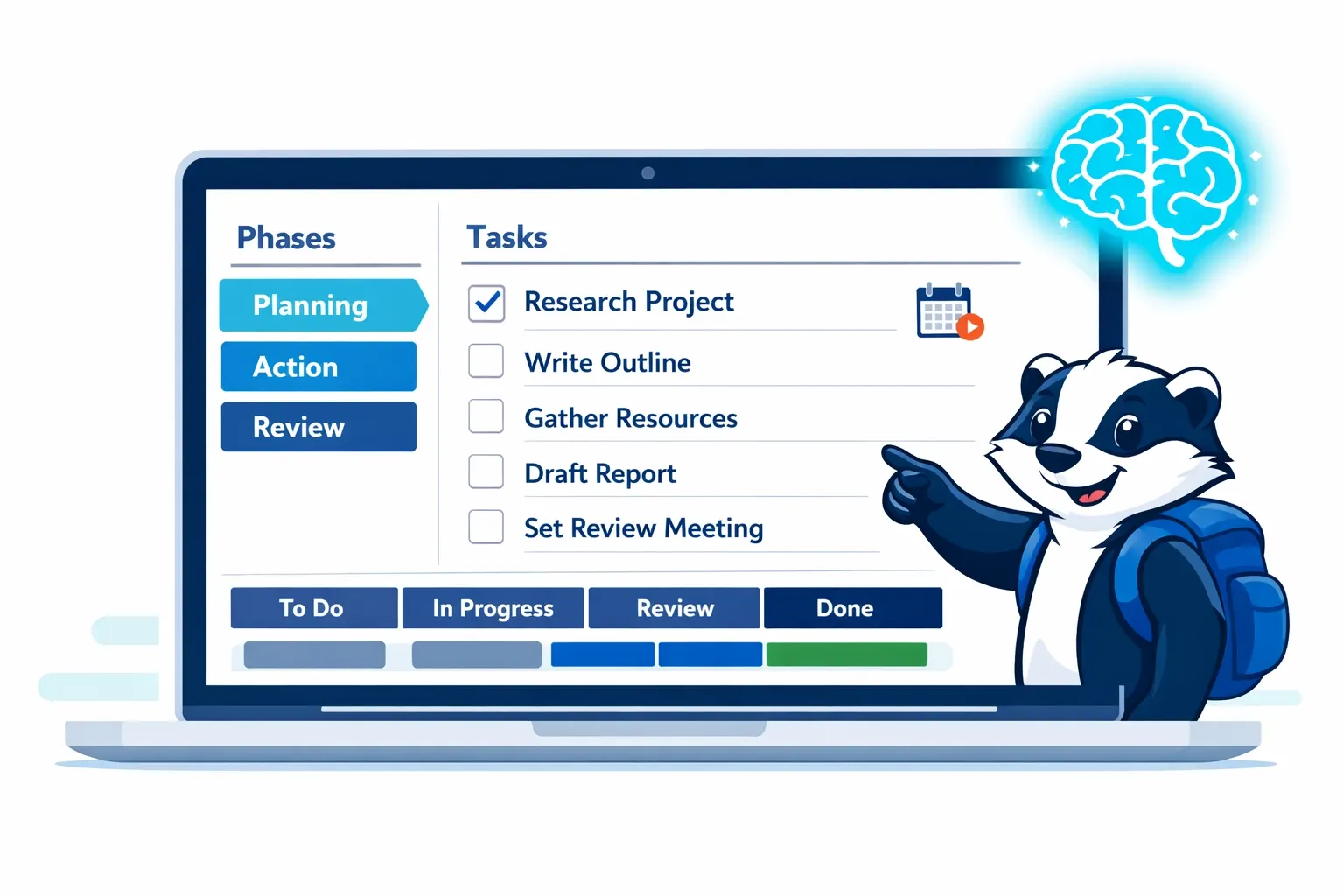
Why Your Brain Is AWOL
Let's talk science for a second. Not the boring kind. The kind that explains why you can scroll TikTok for an hour but can't start that email.
Dopamine is the problem.
Your brain runs on a reward system. When you anticipate something rewarding, your dopamine neurons fire up and say, "Hey, let's do this!" But if you've got ADHD or executive function challenges, those dopamine neurons are basically asleep at the wheel. They're hyposensitive: meaning they don't respond to normal stimuli the way they should.
So when you look at a boring-but-important task like "respond to client emails" or "file expense reports," your brain doesn't get the dopamine hit it needs to care. The task doesn't register as rewarding. So your brain just... doesn't start.
Add to that a sluggish prefrontal cortex: the part of your brain responsible for planning, decision-making, and impulse control: and you've got a recipe for paralysis. Your working memory can't hold the steps in mind. Your cognitive flexibility makes it hard to switch gears. And your inhibitory control? Forget it. Every distraction wins.
The result? You sit there, frozen, while your brain screams, "This is boring! Danger! Abort!"
The Activation Energy Problem
Here's the other piece of the puzzle: activation energy.
Every task requires a certain amount of mental energy to get started. It's like pushing a boulder up a hill. The hardest part is the initial push. Once it's moving, momentum takes over and it gets easier.
But when a task feels overwhelming, uncertain, or just plain dull, your brain creates an emotional barrier. It's trying to protect you from perceived failure, judgment, or discomfort. So it avoids.
And the longer you avoid, the bigger the boulder gets.
This is especially brutal if you've got an interest-based nervous system: a trait common in ADHD brains. Your motivation doesn't come from importance or urgency. It comes from fascination. If a task doesn't light up your brain, you're dead in the water.
So what do you do?
You breach.
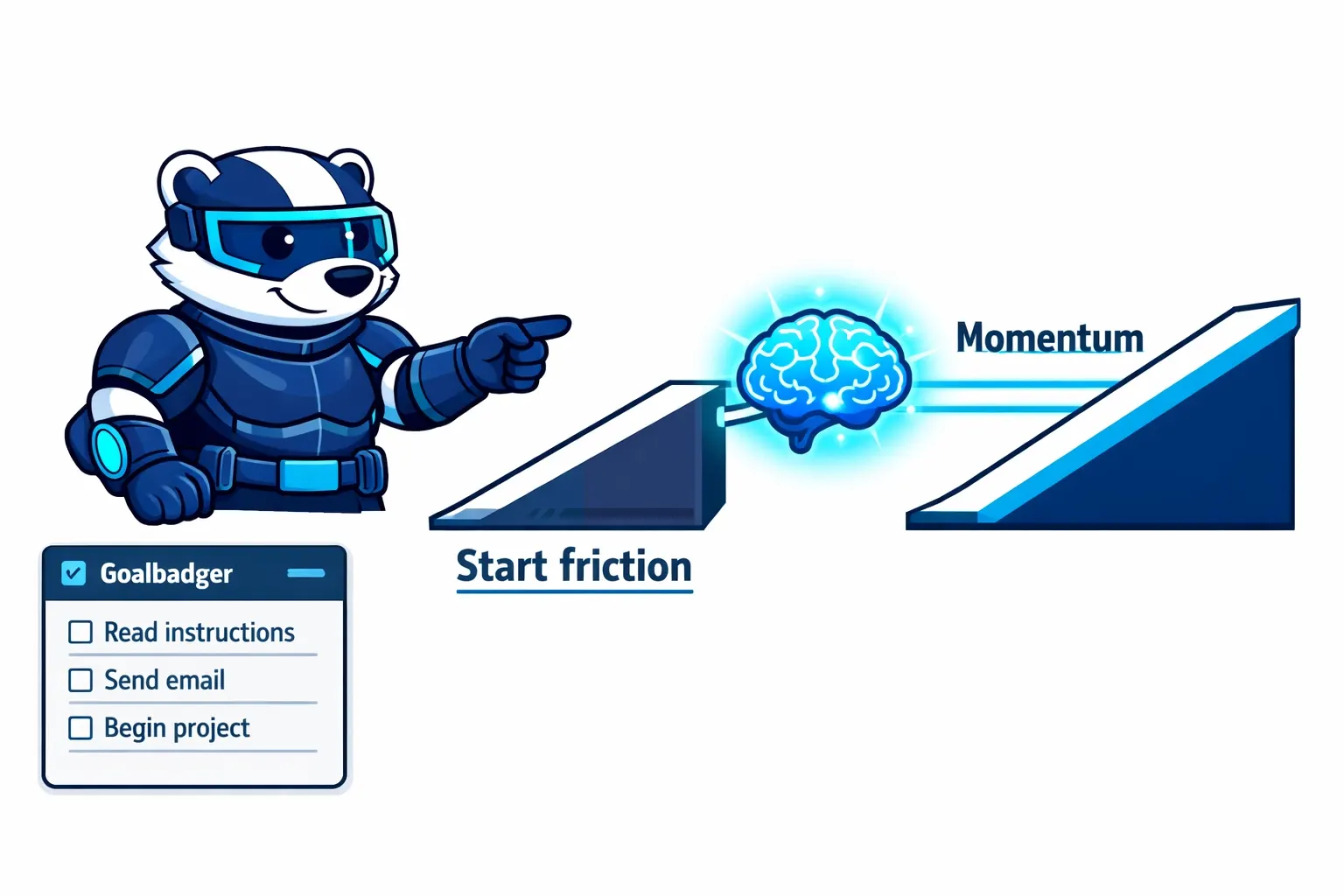
The 2-Minute Breach: The ADHD-friendly start button
Here's the tactic, recruit:
Commit to doing the task for just two minutes. That's it.
Not two hours. Not until it's done. Just two minutes.
Why does this work?
Because your brain doesn't freak out over two minutes. Two minutes isn't scary. Two minutes isn't a commitment. Two minutes is nothing.
But here's the magic: once you start, behavioral momentum kicks in. The hardest part of any task is starting it. Once you're in motion, continuing becomes exponentially easier. Your dopamine system starts to engage. Your prefrontal cortex wakes up. The boulder starts rolling.
More often than not, you'll blow right past the two-minute mark because you're already in the flow.
And if you don't? If you genuinely stop after two minutes? That's still a win. You've broken the paralysis. You've proven to your brain that the task isn't as threatening as it thought. Tomorrow's breach will be easier.
This is a high-probability request sequence in disguise. You're starting with something easy (just two minutes) to build confidence and momentum for the harder thing (finishing the task).
How to run the 2-Minute Breach (the executive function planner version)
Here's the step-by-step you can reuse forever:
1. Name the next action (not the project).
Not “work on the presentation.” Too big.
Use: “open the deck and write one slide title.”
2. Make it physically startable.
Open the doc. Put your hands on the keyboard. Cursor in the box.
(No “getting ready.” That’s just procrastination wearing a suit.)
3. Set a 2-minute timer.
Phone, watch, browser. Doesn’t matter.
4. Do the smallest real action.
One sentence. One reply. One file rename. One bullet point.
Your only job is initiation.
5. Decide what happens at the beep.
If you keep going: great. Ride the momentum.
If you stop: also great. You just trained your brain that starting is safe.
This is what an executive function planner actually does: it removes ambiguity, reduces friction, and gives you a tiny “start script” you can follow even on low-motivation days.
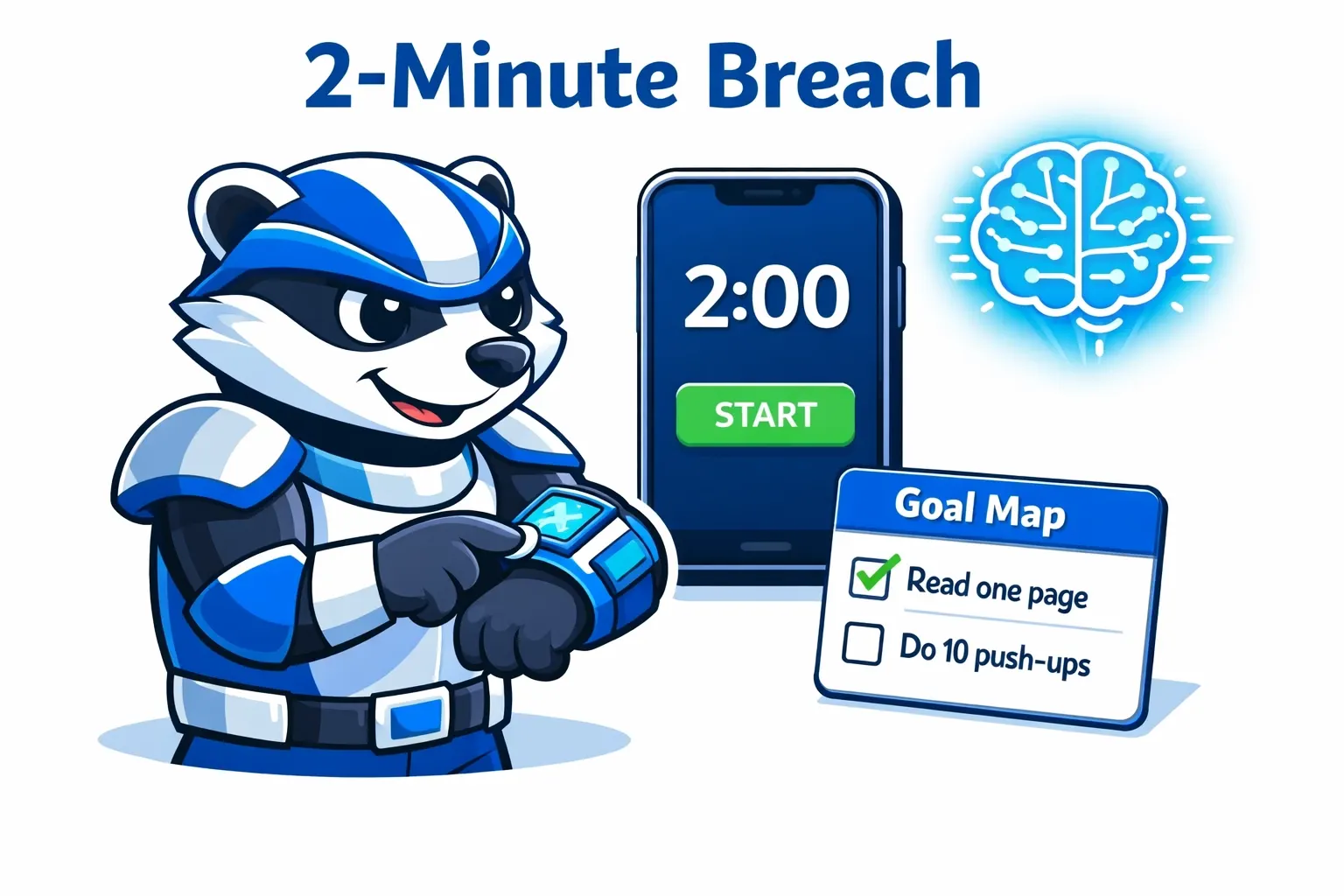
Why This Works When Willpower Doesn't
Willpower is a finite resource. You can't just "try harder" your way out of executive dysfunction. Your brain doesn't work that way.
But situation-specific behavioral links: that's a different story. When you create a simple, repeatable process (like the 2-Minute Breach), you're reducing the amount of in-the-moment decision-making required. You're not asking your brain to decide to start. You're asking it to follow a script.
Scripts are easy. Scripts don't require motivation. Scripts just require execution.
And the more you run the script, the more automatic it becomes. Eventually, starting tasks stops being this monumental act of willpower and becomes just... what you do.
That's when you know you've leveled up.
Turn this into a real executive function planner (with Goalbadger)
Here's where Goalbadger becomes your unfair advantage.
You already know what kills task initiation faster than anything: decision fatigue. When the goal is huge and vague (“get in shape,” “start a business,” “write the thesis”), your brain has to do a ton of executive-function work before you even begin.
And that’s exactly the work ADHD brains get punished for.
That’s why we built Goalbadger as a phase-based executive function planner (and yes, it’s a productivity app for ADHD by design): the system does the chunking so you don’t have to.
What phase-based planning fixes (in plain English)
Overwhelm → phases create smaller “chapters” you can actually see
Ambiguity → tasks are written as concrete outcomes, not fuzzy intentions
Starting friction → micro-tasks make the 2-minute breach feel easy
Time blindness → your plan lives next to your calendar and reminders
A quick example (so it clicks)
Goal: Launch a personal blog
Phase 1: Set up the foundation
Task: Choose a platform
Next micro-task (2-minute breach): Open a comparison doc and add one line: “WordPress pros/cons”
That’s not “launch a blog.”
That’s startable.
And once it’s startable, you can win.
Call to action: try phase-based planning (today)
If you want this to feel less like “motivation” and more like an actual operating system:
Create a Goal Map in Goalbadger
Let the AI break it into phases + micro-tasks
Use the 2-minute breach on the next task every day
Watch momentum stack (because it always does)
Try it here: https://goalbadger.app
And if you want the deeper walkthrough, here’s the guide: The power of phase-based planning
Your next seven days (simple, not heroic)
Run one 2-Minute Breach per day for a week.
That’s it.
Pick the task you’ve been avoiding most
Shrink it to the next micro-action
Set the timer
Start
Log the win (especially if you’re using Goalbadger)
Because here’s the truth: you don’t think your way into action. You act your way into action. And for ADHD brains, that’s the whole game.
If you want a planner that actually supports executive function (instead of just listing guilt), use a phase-based system that tells you the next step when your brain goes quiet.
Try Goalbadger’s phase-based planning: https://goalbadger.app
Plan it. Track it. Do the thing.